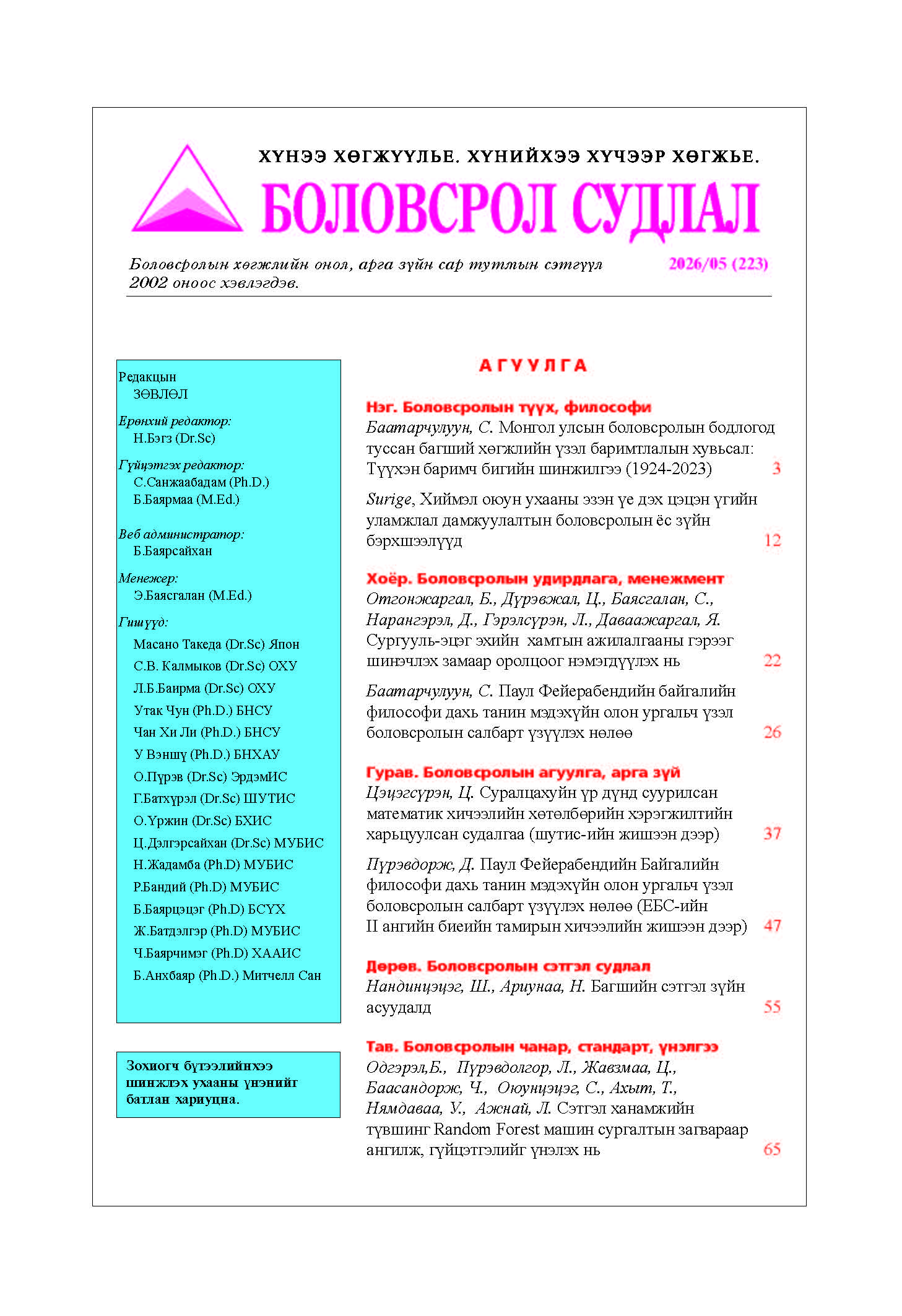
The Influence of Paul Feyerabend's Epistemological Pluralism in the Philosophy of Nature on the Education Sector
DOI:
https://doi.org/10.65168/bs.223-4Keywords:
Paul Feyerabend, Philosophy of Nature, Pluralistic Education, epistemology, CulturalAbstract
The paper will discuss the Philosophy of Nature by Paul Feyerabend and discuss its application to modern educational theory and practice. The argument put forward by Feyerabend, questioning methodological monism and supporting epistemological pluralism, attacks mainstream models of knowledge production and transmission in education. His organic perspective offers a philosophical basis to the re-evaluation of learning as a holistic and culturally rooted process by conceiving nature as an interrelated dynamic system. This paper, based on historical analysis, mythology, and cultural anthropology, contends that education is required to transcend hard scientific rationalism in the direction of pluralistic, interdisciplinary, and context-specific modes of education. This kind of transformation promotes the adoption of diverse bodies of knowledge, indigenous, artistic, and experiential forms of knowing, into the educational systems. In conclusion, the philosophy of Feyerabend contributes to an educational paradigm that promotes critical thinking, creativity, and ecological consciousness and represents a way to more inclusive and sustainable learning environments.
References
Burgess, C., Bishop, M., & Lowe, K. (2022). Decolonising Indigenous education: the case for cultural mentoring in supporting Indigenous knowledge reproduction. Discourse: Studies in the Cultural Politics of Education, 43(1), 1-14. https://doi.org/10.1080/01596306.2020.1774513
de Lacerda Abrahão, L. H., & Velloso, R. (2023). APRESENTAÇÃO DE “AS INVESTIGAÇÕES FILOSÓFICAS DE WITTGENSTEIN”, DE PAUL FEYERABEND. Revista Ideação, 1(47), 244-262. https://doi.org/10.13102/ideac.v1i47.9954
Feyerabend, P. (1975). Against method. New Left Books.
Heit, H. (2016). Reasons for relativism: Feyerabend on the ‘rise of rationalism’in ancient Greece. Studies in History and Philosophy of Science Part A, 57, 70-78. https://doi.org/10.1016/j.shpsa.2015.11.007
Ingman, B. C. (2024). Experiential criticism: a methodology for researching experience in education. International Journal of Research & Method in Education, 47(3), 201-221. https://doi.org/10.1080/1743727X.2023.2242275
Kusch, M. (2016). Relativism in Feyerabend's later writings. Studies in History and Philosophy of Science Part A, 57, 106-113. https://doi.org/10.1016/j.shpsa.2015.11.010
Martin, E. C. (2016). Late Feyerabend on materialism, mysticism, and religion. Studies in History and Philosophy of Science Part A, 57, 129-136. https://doi.org/10.1016/j.shpsa.2015.11.017
Munchin, D. (2019). Paul Feyerabend: The Worst Friend of Theology? Theology and Science, 17(4), 469-484. https://doi.org/10.1080/14746700.2019.1670962
Oberheim, E., & Preston, J. (Spring 2025 Edition). Paul feyerabend. Stanford Encyclopedia of Philosophy. https://plato.stanford.edu/archives/spr2025/entries/feyerabend/
Shaw, J. (2017). Was Feyerabend an anarchist? The structure (s) of ‘anything goes’. Studies in History and Philosophy of Science Part A, 64, 11-21. https://doi.org/10.1016/j.shpsa.2017.06.002
Shaw, J. (2020). The revolt against rationalism: Feyerabend’s critical philosophy. Studies in History and Philosophy of Science Part A, 80, 110-122. https://doi.org/10.1016/j.shpsa.2019.05.007
Shaw, J., & Stuart, M. T. (2022). Feyerabend and the Philosophy of Physics. European Journal for Philosophy of Science, 11(37), 1-4. https://doi.org/10.1007/s13194-021-00361-w
Tsou, J. Y. (2003). Reconsidering Feyerabend's “Anarchism”. Perspectives on Science, 11(2), 208-235. https://doi.org/10.1162/106361403322495894
Yous, M. L., Strachan, P. H., & Ploeg, J. (2020). Is feyerabendian philosophy relevant for scientific knowledge development in nursing? Nursing Philosophy, 21(3), e12309. https://doi.org/10.1111/nup.12309